

Microneedling in Boston: What Does It Do for Your Skin?
Learn about microneedling benefits, results, downtime, and skin rejuvenation in Boston.
If you have started noticing changes in your skin, such as uneven texture, fine lines, visible pores, or lingering acne scars, you may have come across microneedling while researching skin rejuvenation treatments in Boston.
But what exactly does microneedling do?
Microneedling is a minimally invasive treatment that creates controlled microchannels in the skin. These microinjuries stimulate the skin's natural healing response, including processes involved in collagen and elastin production. Over time, this can help improve the appearance and quality of the skin.
What makes microneedling particularly appealing is that it focuses on encouraging the skin's own renewal process rather than dramatically changing the way you look.
Still, microneedling is not a universal solution for every skin concern. The type of concern you have, your skin condition, medical history, treatment goals, and expectations all matter when determining whether microneedling is appropriate for you.
At New England Aesthetics, skin rejuvenation begins with understanding the individual. If you are considering microneedling in Boston, here is what you should know before your first treatment.
What Is Microneedling?
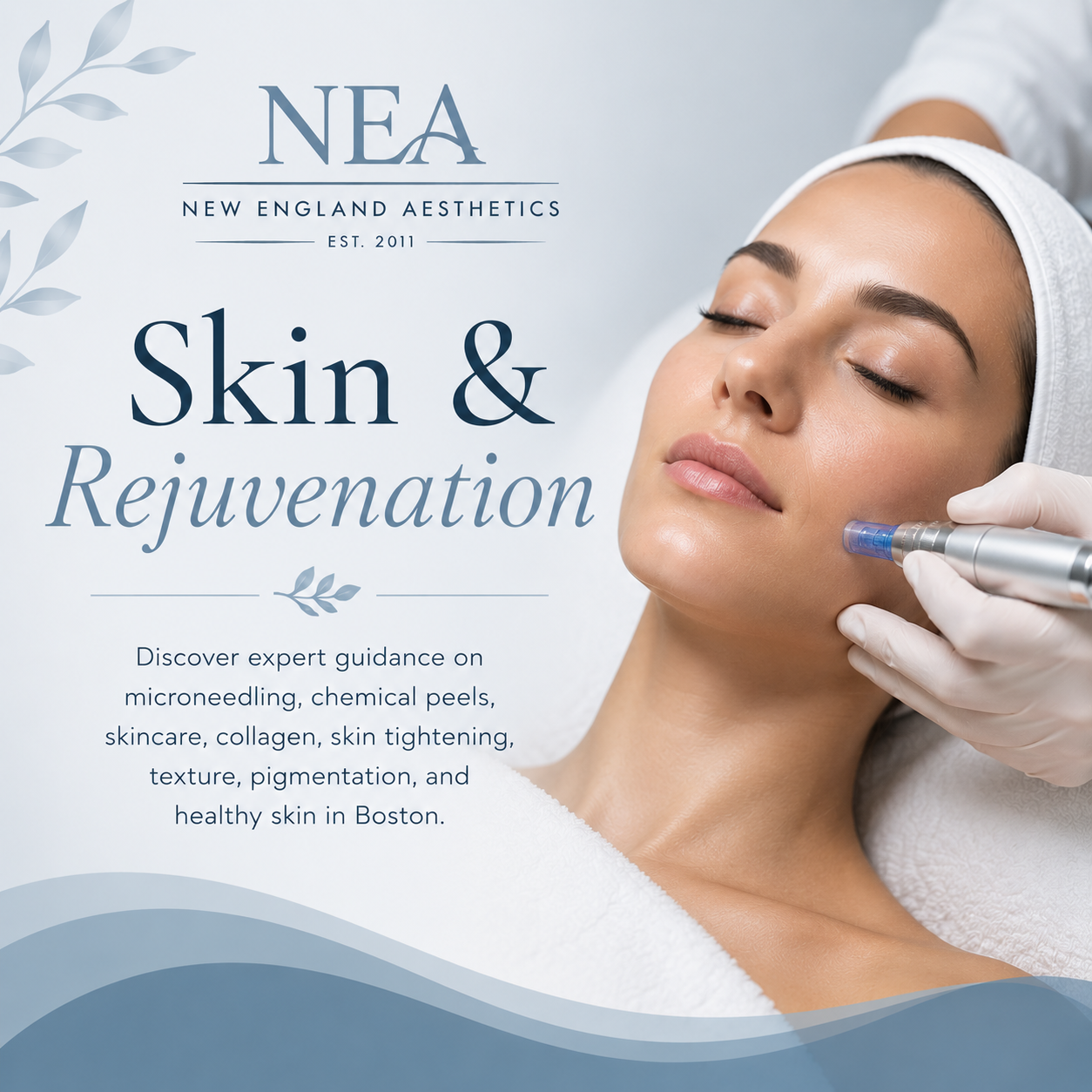
Microneedling is sometimes called collagen induction therapy. During a professional microneedling treatment, a specialized device containing very small sterile needles creates controlled microchannels within the skin.
The purpose is not simply to puncture the skin. Those controlled microinjuries initiate a natural wound healing response. As the skin repairs itself, processes involved in collagen and elastin production and tissue remodeling are activated.
Collagen is an important structural protein that contributes to the firmness and support of the skin. As we age, changes in collagen, sun exposure, environmental factors, genetics, and lifestyle can all contribute to visible changes in skin quality.
Microneedling is designed to encourage remodeling from within the skin. This is one reason the treatment is commonly considered by people who want to improve texture and overall skin quality without pursuing more invasive procedures.
What Does Microneedling Help With?
One of the most common online searches about this treatment is simply: What is microneedling good for? The answer depends on the individual, but professional microneedling may be considered for concerns including:
- Fine lines
- Uneven skin texture
- Certain acne scars
- Visible pores
- Some types of scarring
- Changes associated with collagen loss
- Overall skin quality
Does Microneedling Really Stimulate Collagen?
Yes, collagen stimulation is one of the primary reasons microneedling is used for skin rejuvenation. The treatment creates controlled microinjuries that initiate the skin's healing process. As part of that process, the skin begins repairing and remodeling the treated tissue.
Collagen production is involved in this response. This is also why microneedling results take time. You should not expect the final result immediately after treatment.
Your skin may temporarily look brighter or feel different once the initial redness resolves, but collagen remodeling occurs progressively. The changes patients are seeking typically develop over the weeks following treatment rather than overnight.
Can Microneedling Improve Acne Scars?
Acne scars are one of the most common reasons people research microneedling. Microneedling may help improve the appearance of certain acne scars by encouraging remodeling within scarred skin.
However, not all acne scars are the same. Some scars are relatively shallow. Others are deeper. Some involve depressions in the skin, while discoloration left behind after acne may be mistaken for actual scarring.
This distinction matters because different concerns can require different treatment approaches. If you are considering microneedling specifically for acne scars, a professional assessment should come first. Your provider can examine the type of scarring, its depth, your overall skin condition, and other factors before determining whether microneedling may be appropriate.
Does Microneedling Help Fine Lines?
Microneedling may help soften the appearance of certain fine lines by supporting collagen remodeling and improving overall skin quality. But not every wrinkle is primarily a skin quality concern.
Some facial lines are created or intensified by repeated muscle movement. Others become more noticeable because of collagen loss, skin changes, sun exposure, or facial volume changes.
Botox®, for example, primarily addresses selected muscle activity. Dermal fillers address certain volume and contour concerns. Microneedling focuses more directly on skin quality and remodeling. Sofwave® uses ultrasound technology to stimulate collagen as part of a noninvasive skin tightening approach.
Rather than asking which treatment is universally best for wrinkles, the better question is: What is causing the lines I want to improve? Once that is understood, your provider can discuss which treatment makes the most sense.
Can Microneedling Reduce the Appearance of Pores?
Many patients search for ways to "shrink" their pores. The reality is more nuanced. Pore visibility can be influenced by genetics, oil production, skin texture, age, and the structural support surrounding the pore.
A professional treatment cannot simply erase pores. However, improving the overall texture and quality of the skin may make pores appear less noticeable in some patients. Microneedling may therefore be considered when visible pores are part of a broader texture concern.
The goal should be smoother, healthier looking skin rather than completely poreless skin.
What Happens During a Microneedling Appointment?
Your appointment should begin with an evaluation of your skin and a conversation about what you want to improve. Your provider may discuss your medical history, skincare routine, previous treatments, current medications, and any upcoming events that could affect treatment timing.
The skin is then cleansed and prepared. Depending on the treatment protocol, a topical numbing product may be used to improve comfort.
During the procedure, the microneedling device is systematically passed across the selected treatment area, creating controlled microchannels. Patients may describe the sensation as pressure, vibration, scratching, or mild discomfort. The experience can vary according to individual sensitivity and the area being treated.
Immediately afterward, the skin commonly appears pink or red. Your provider should then explain how to care for your skin while it recovers.
Does Microneedling Hurt?
Comfort is subjective, but many patients find professional microneedling manageable. A topical numbing product may be applied before treatment when appropriate.
You may feel more sensitivity in certain areas of the face than others. The objective is not to make treatment unnecessarily aggressive. Treatment depth and technique should be selected according to your skin, concern, treatment area, and the professional judgment of your provider.
More discomfort does not automatically mean a more effective treatment.
How Long Does a Microneedling Appointment Take?
Treatment time varies depending on the area being treated and the protocol used. The appointment may include consultation, cleansing, preparation, numbing time when applicable, the microneedling procedure itself, and post-treatment instructions.
If it is your first appointment, allow enough time for a thorough consultation. The treatment itself may be relatively straightforward, but the assessment behind it matters. Your provider should understand your skin before deciding how to treat it.
What Is the Downtime After Microneedling?
Microneedling is minimally invasive, but your skin still needs time to recover. Immediately following treatment, the skin may appear red or pink, sometimes resembling a mild sunburn. Temporary effects may include:
- Redness
- Sensitivity
- Tightness
- Dryness
- Mild swelling
- Flaking
- A rough or slightly textured feeling during healing
What Should You Avoid After Microneedling?
Your skin may be more sensitive immediately after treatment, so this is generally not the time to experiment with a complicated skincare routine. Your provider may recommend temporarily modifying certain skincare products or activities while your skin recovers.
Depending on your treatment, this may include avoiding certain active ingredients, excessive heat, strenuous exercise, direct sun exposure, or other sources of irritation for a period of time.
Sun protection is particularly important. Protecting the skin from unnecessary UV exposure is an essential part of maintaining skin health generally, and it becomes especially relevant when your skin is recovering from a professional treatment.
Always follow the aftercare instructions given by the provider who treated you. Advice from another person's microneedling experience may not apply to your skin or treatment.
How Soon Will I See Results From Microneedling?
Microneedling is a progressive treatment. Some patients notice that their complexion looks refreshed once the initial redness and recovery period have resolved.
However, the collagen remodeling process takes longer. Improvements in texture, fine lines, and overall skin quality may continue developing over the following weeks.
This makes microneedling different from treatments designed to produce an immediate visible change. Patience is part of the process. If your goal is collagen stimulation and skin remodeling, the changes occurring beneath the surface need time to develop.
How Many Microneedling Treatments Will I Need?
There is no universal answer. The number of treatments recommended depends on factors including:
- Your skin condition
- The concern being treated
- The severity of that concern
- Your treatment goals
- Previous skin treatments
- Individual healing response
Microneedling vs. Chemical Peels: What's the Difference?
Both treatments can play a role in skin rejuvenation, but they work differently. Microneedling creates controlled microchannels that stimulate a healing and remodeling response within the skin. Chemical peels use carefully selected solutions to exfoliate and resurface the skin at varying depths.
Which treatment is appropriate depends on the concern. A patient focused on certain acne scars or uneven texture may have different needs from someone primarily concerned about superficial pigmentation, dullness, or another surface level issue.
In some cases, a broader skincare plan may incorporate different treatments at different times. That does not mean everyone needs both. Your provider should determine which approach aligns with your skin and goals.
Microneedling vs. Sofwave®: Which Is Better?
Microneedling and Sofwave® should not necessarily be viewed as competing treatments. They address different aspects of rejuvenation.
Microneedling is often considered for concerns involving skin texture, fine lines, certain scars, and overall skin quality. Sofwave® uses ultrasound technology to stimulate collagen and is associated with noninvasive skin tightening.
If your primary concern is texture, the conversation may be different from someone whose main concern is skin laxity. Some patients have both. A personalized consultation can help determine whether one treatment is appropriate or whether different treatments may play separate roles in a longer term plan.
Microneedling vs. Botox®: Which Do I Need?
This depends on what you want to improve. Botox® temporarily reduces activity in selected muscles and is commonly associated with certain expression lines. Microneedling works on the skin itself.
For example, a forehead line that becomes prominent when you raise your eyebrows may involve muscle movement. Fine surface texture, certain acne scars, and some other skin quality concerns involve a different conversation.
This is why identifying the cause of your concern is more useful than selecting a treatment based on popularity.
Is Microneedling Good for Aging Skin?
Microneedling can be considered as part of a healthy aging skin plan for appropriate candidates. As skin ages, collagen changes, texture can become less smooth, and fine lines may become more visible.
Treatments that encourage collagen remodeling may therefore be useful for some patients seeking gradual improvement in skin quality. However, aging skin is not one single condition. One person may be primarily concerned about texture. Another may have pigmentation. Another may notice laxity. Another may be concerned about volume changes.
These concerns can require different approaches. Healthy aging is about treating the skin you actually have rather than trying to follow a universal treatment schedule.
Who Is a Good Candidate for Microneedling?
Microneedling may be considered by adults who want to address certain skin texture concerns, fine lines, acne scars, or overall skin quality. However, not everyone is automatically a candidate.
Your current skin condition, medical history, medications, active skin concerns, healing history, recent procedures, and other individual factors may affect whether treatment is appropriate.
This is why professional evaluation matters. Be open with your provider about your health history and anything you are currently using on your skin. The consultation exists to help determine whether microneedling is appropriate, not simply to confirm a treatment you have already selected.
Can You Get Microneedling Before a Wedding or Major Event?
You can incorporate microneedling into a pre-event skincare plan, but timing is important. Microneedling should not be treated as a last minute facial.
Temporary redness, dryness, sensitivity, or flaking can occur during recovery. More importantly, collagen remodeling develops over time.
If you are preparing for a wedding, reunion, professional photography session, vacation, or another important event, tell your provider the date. Planning ahead allows enough time for recovery and gives your provider more flexibility when developing your treatment schedule.
When Is the Best Time of Year for Microneedling in Boston?
Boston's seasons can have a noticeable effect on the skin. Cold weather, indoor heating, summer humidity, and seasonal sun exposure can all influence how your skin feels and behaves.
Microneedling may potentially be incorporated into a treatment plan at different times throughout the year, but your schedule and lifestyle matter. If you are planning significant sun exposure, travel, outdoor activities, or an important event, discuss those plans during your consultation.
There is no single perfect month for every patient. The best timing is the timing that makes sense for your skin and allows you to follow appropriate aftercare.
Can Microneedling Be Part of a Long Term Skincare Plan?
Yes. Rather than thinking about microneedling as a one time solution, it may be more useful to consider how professional treatments fit into your overall skin strategy.
Professional procedures and daily skincare serve different purposes. Microneedling may support collagen remodeling, while an appropriate home skincare routine helps maintain hydration, protection, and overall skin health between appointments.
Depending on your concerns, your broader plan may also include chemical peels, Sofwave®, medical grade skincare, or other treatments. The objective is not to perform every available treatment. A sophisticated skincare plan is often about knowing what you need, what you do not need, and when each treatment makes sense.
Is Deeper Microneedling Always Better?
No. This is an important misconception. Patients sometimes assume that if microneedling works by creating controlled microinjuries, deeper treatment must automatically produce better results.
That is not how professional skin treatment should be approached. Treatment intensity should be determined by your skin, the concern being addressed, the treatment area, the device being used, and professional judgment.
Creating unnecessary trauma does not equal better rejuvenation. Appropriate treatment balances the desired response with safety, recovery, and the condition of the skin.
How Should I Prepare for a Microneedling Consultation?
You do not need to know exactly what treatment you need before arriving. Instead, think about what you notice about your skin.
Perhaps makeup no longer sits as smoothly as it once did. Maybe acne scars become particularly visible in certain lighting. You may feel that your skin looks dull despite using good products. Perhaps you have started noticing fine lines or changes in texture.
Those observations are useful. You should also be prepared to discuss your current skincare routine, prescription products, medications, supplements, previous aesthetic treatments, acne history, medical history, recent sun exposure, and upcoming events.
Your provider can then evaluate your skin and discuss whether microneedling or another treatment may be appropriate.
What Should Natural Skin Rejuvenation Look Like?
At New England Aesthetics, our philosophy of natural looking results extends beyond injectables. Skin rejuvenation should not make your skin look artificial. It should still look like your skin.
The objective may be smoother texture, softer appearing acne scars, healthier looking skin, improved radiance, or gradual improvement in fine lines. Real skin has texture. Real skin has pores. Healthy skin does not mean flawless skin.
A thoughtful approach to rejuvenation respects that distinction. For patients interested in healthy aging, the goal is often not to erase every sign of time. It is to support the skin so it looks healthy, refreshed, and well cared for at every stage of life.
Why Does the Provider Matter for Microneedling?
Microneedling devices have become widely discussed online, but professional treatment is about much more than moving a device across the skin. Your provider needs to assess your skin, determine whether treatment is appropriate, choose an appropriate approach, maintain proper treatment standards, and help you understand recovery.
The consultation also provides an opportunity to determine whether microneedling is actually the treatment most likely to address your concern. Sometimes it may be. Sometimes another treatment may make more sense.
That distinction is an important part of personalized aesthetic care. At New England Aesthetics, we believe treatments should follow the patient's needs rather than the trend of the moment.
A More Personal Approach to Skin Rejuvenation
There is no single treatment that every person needs for healthier looking skin. Your skin has its own history. Acne, sun exposure, genetics, skincare habits, aging, lifestyle, and previous treatments can all influence what you see today.
That is why the first question should not be: "What treatment is everyone getting?" It should be: "What does my skin actually need?"
Microneedling may be one part of that answer. For appropriate candidates, it offers a way to encourage the skin's natural remodeling processes while addressing concerns such as texture, certain acne scars, fine lines, and overall skin quality.
The best way to determine whether it belongs in your skincare plan is through an individualized assessment.
Frequently Asked Questions
Does microneedling really help acne scars?
Microneedling may improve the appearance of certain acne scars by encouraging remodeling within the skin. Because acne scars vary in type and severity, an in-person skin assessment is important before determining whether microneedling is appropriate.
How long does it take to see microneedling results?
Some patients notice their skin appears refreshed after the initial recovery period, but collagen remodeling takes time. Improvements in texture and overall skin quality may continue developing over the weeks following treatment.
How many microneedling treatments will I need?
There is no standard number for every patient. Your recommended treatment plan depends on your skin, the concern being addressed, its severity, your goals, and your individual response.
How much downtime is there after microneedling?
Temporary redness, sensitivity, tightness, dryness, mild swelling, or flaking can occur. Recovery varies according to the individual and treatment performed. Your provider will explain what to expect and provide personalized aftercare instructions.
Is microneedling better than a chemical peel?
Neither treatment is universally better. They work differently and can address different concerns. A professional skin assessment can help determine which approach is more appropriate for your skin and goals.
Interested in learning more?
Schedule a personalized consultation with our team.
More from Skin & Rejuvenation
What Is Sofwave®? Understanding Non-Surgical Skin Tightening
Sofwave® uses advanced ultrasound technology to stimulate collagen and tighten skin without surgery. Here's how it works.
Read the PerspectiveMicroneedling vs. Chemical Peels: Which Treatment Is Right for Your Skin?
Both treatments improve skin texture and tone, but they work differently. Here's how to choose the right approach for your goals.
Read the Perspective